


Power Wheelchairs and Empowering Veterans

May 30th, 2013

Power wheelchairs are a recent invention of the mid-twentieth century and originally designed for injured veterans of World War II. George Klein, the person credited with producing Canada’s Great Invention, specifically designed the modern power wheelchair for veterans who returned from war sustaining paraplegia.

 Paraplegics prior to the 1950s were relegated to total dependence on others for mobility. These injured veterans most frequently were given manual wheelchairs, which did not provide the independence that the once able-bodied people were accustomed too. In the interest of giving both Canada and the global community’s returning heroes access to the life they lived prior to fighting in the Second World War, Klein used resources within his reach while with the National Research Council of Canada to devise the first functional power wheelchair.

George Klein’s design was so successful that now power wheelchairs are prescribed for patients with conditions ranging from paraplegia to COPD and other pulmonary diseases that affect mobility. Power wheelchairs are an invention designed to give ability back to those who physically cannot travel the places they love and efficiently move around their home. Twenty seven years after his death, Klein was inducted into the Canadian Science and Technology Museum Hall of Fame in 1995 for the execution of his vision.

Part of the reason his design was so successful is because the needs and ideas expressed by patients were utilized in the final designs. This is continued by Aeroflow Healthcare and through collaborating with a patient and their physician on a custom power wheelchair.

As George Klein envisioned them, power wheelchairs are customized for patient’s unique situations so that their lives can flourish despite mobility issues.  Now, nearly sixty years later, the designs are so advanced that each patient can receive exactly what they need in most any environment they encounter.

Custom Joystick Controllers from Aeroflow Inc

May 21st, 2013

 Rehabilitation power wheelchairs are designed for patients with conditions such as paralysis, degenerative diseases, and morbid obesity. These chairs come with multiple options such as seats that have electronic tilt and recline controls just for folks who depend on their power wheelchair from the time they get out of bed to the end of their evening.

Quantum Rehab works with Aeroflow to provide these specialized devices. These power wheelchairs are a custom design to meet the patient’s needs, and for insurance to agree to cover any of it a physical therapist must evaluate the patient. The therapist’s assessment of the patient’s limitations and weaknesses allows Aeroflow’s mobility technicians to design the best possible chair.

 One of the foremost concerns of people looking for a rehabilitation chair is how the device is controlled.  Quantam Rehab utilizes the Q-Logic drive control system, a large line of controller options. These options include expandable and non-expandable systems that have are software-based for easy updating and maintenance. The software includes display screens that cover the speed, status of seat position, battery health, and reminder alarms.

Many patients Aeroflow services have continual care, and the optional models of the Q-Logic system include specialty joystick controls that maneuver for easy attendant use. For those patients with upper limb paralysis or amputations, Aeroflow provides a controller called the Sip-N-Puff which uses the patient’s breath to control the chairs speed, drive, and reverse functions.

Q-Logic also offers an environmental control unit for those without constant care. This item acts as a universal remote, simplifying the use of entertainment systems and household appliances like lights and fans. Environmental control units can also be programmed with Bluetooth capabilities so that the power wheelchair works as a single system to make all of daily life’s technologies within reach.

Deciding whether a rehabilitation power wheelchair is right for you requires the consultation of your doctor, a physical therapist and an Aeroflow mobility technician. Deciding which controller is needed has a lot of to with the medical limitations of the patient, but will be designed to make the patient comfortable.  Through a collaborative effort, we can be sure to make a rehabilitation power wheelchair meet all of your expectations and needs.

Maintaning an Investment: Care for Power Wheelchairs and Scooters

May 14th, 2013

Power wheelchairs and scooters are major investments that improve the quality of life for folks who have limited mobility. Because these devices make such a positive difference, it is important to closely observe your power wheelchair for any maintenance needs.

Many of these devices come with limited warranties, and one of the limitations is any damage that occurred outdoors. This includes any kind of excessive dirt build up or water damage. While many people need to take their power wheelchairs to the grocery store to shop, using it to actually drive to the grocery store is a liability for getting repairs covered. These warranties cover replacements of loose armrests, damaged joysticks, and torn seat cushions but will not extend to owner negligence.

Another major part of maintenance is battery replacements. Medicare in particular will cover new batteries starting after a year of owning the device, and then once every six months. Caring for the battery system is important because it can lead to many other problems with the power wheelchair or scooter. Batteries can become over-worn when someone drives their power mobility device at top speeds very frequently or leaves it plugged into the charger for too long. The problems associated with excessive wear on the battery can be avoided by only using the top speed when necessary, and following technician instructions for charging the device.

Any moisture and spills that occur around the chair should be addressed immediately, as it will compromise the electronics of the power wheelchair. If the user has an issue with incontinence, contact Aeroflow to see what the process for acquiring a seat cushion specifically designed for easy clean-up of any accidents. The wheels should also be checked monthly to be sure they are properly attached and still maintaining their shape. If the wheels become uneven, the nuts and bolts holding the chair together may become loose or the bottom will drag on the floor.

At Aeroflow our repairs department will walk our patients through any issues they are having with their power chair. If we cannot troubleshoot the issue over the phone and did provide the power chair or scooter, we will schedule for a technician to visit the patient’s home and evaluate the problem.

Pride’s Z-Chair: Best of Both Worlds

May 8th, 2013

While Medicare and Medicaid will only cover the cost of power wheel chairs or scooters for use inside the home, many people also need the device to travel outside the home. When someone can’t cook, clean, or move from room to room without a power mobility device it is hard to imagine making a routine grocery store trip without it.

The major difference between scooters and power wheel chairs is that scooters come apart into multiple pieces, which makes for easy traveling. Power wheel chairs are designed to be very stable and are a single unit. Pride Mobility, the manufacturer of Jazzy Power Chairs and Pride Scooters, has recently created a hybrid device called the Z-Chair. The Z-Chair provides the support of a power wheel chair with the travelling capabilities of a scooter.

Pride’s Z-Chair breaks down into four separate pieces, the heaviest of which is the base and is about 35 pounds. The device is like other power chairs with a joystick controller and an extremely small turn radius. This is an ideal device for patient’s who have arthritis or any kinds of back problems, as the tiller steering system on scooters will make these issues worse. The Z-Chair’s lightweight frame only allows for a weight capacity of 250 pounds, but for those who meet this guideline it can be a best-of-both-worlds device.

Many of Aeroflow’s patients say that they want a scooter without realizing that they have the potential to make certain health issues like arthritis much worse. Scooters require a patient to sit up straight without back support and continuously flex their hands to utilize the tiller steering system and drive the device. A power chair is often what is needed to minimize pain and provide the best support.

Pride’s Z-Chair combines the scooter’s ability to disassemble and travel with a power chair’s stability and support, providing patients with an ideal mobility device. Aeroflow’s mobility representatives can discuss the process for acquiring one at greater length over the phone.

Aeroflow Inc and Project Access partner to Promote a Healthier Western North Carolina

April 25th, 2013

Project Access, a Buncombe County-based initiative, has partnered with Aeroflow, local physicians and other community partners to help improve the health of low-income, uninsured Buncombe County residents.

This service is available at no costs to needy residents. Project Access is not insurance, but a way for physicians and medical companies like Aeroflow to help community members better access healthcare.  With the number of uninsured residents sky-rocketing since the mid 90’s, Project Access and its partners have helped residents locate the care they need in a cost-effective manner.

Aeroflow Healthcare has been a proud partner in this initiative since 2011, donating almost $200,000 in services and equipment including CPAP machines, home oxygen services and nebulizers.  Aeroflow, a locally owned and operated business, stands behind it motto: “We are committed to following our mission to improve each of our patient’s quality of life through compassion, excellent service, and exceptional products. We feel that it is our duty, responsibility, and privilege to help each of our patients regain their freedom and live a better life.”

Aeroflow is intent on not only growing its business but its community service as well, helping to set the standard for excellence and service to all needy Buncombe County in search of medical care.

What do I do with my old wheelchair or mobility device?

April 25th, 2013

by Lilith Latini

When insurance considers someone eligible to upgrade their power mobility device, most people take advantage of the opportunity. Deciding what to do with your used power wheel chair or scooter can be big decision. Donation options are widely available and a necessary resource for those who cannot afford to acquire one of these devices.

At Aeroflow, we do not have the facilities to pick up used power chairs and scooters that we did not originally provide. Because different providers utilize different brands and models of power mobility devices, and we are only able to take those that we originally dispensed. The working and usable parts of these old devices that we take back in are repurposed by our technicians for maintenance and repairs.

If you are looking into getting a power wheel chair or scooter through Aeroflow, the opportunity to recycle your device locally is most often facilitated through church organizations. These groups are able to bypass insurance regulations and reach out to their direct community to provide for whoever has the greatest need. Church groups do not gain profit on providing these devices to congregation members. Many of our patients at Aeroflow talk about their inability to go to church due to their mobility, and donating power chairs and scooters to churches are a great way to ensure that someone can still participate in weekly services.

Another option that is widely available is to recycle power wheel chairs or scooters at a donation-based thrift store. Organizations like Good Will or Salvation Army have numerous locations. Aeroflow recommends the locally based efforts of Western Carolina Rescue Ministry Super Thrift Store, whose proceeds goes to services and assistance for the homeless, poor, and addicted in our communities.

Just in the Piedmont, the Greensboro based home health care group called Angel Hands also is actively accepting donations of any mobility equipment. This includes walkers, canes, lift chairs, as well as power wheel chairs and scooters. They can be contacted at 336-375-8288 to discuss pick-up options. Their chairs are provided at no cost to their fixed and low income patients who desperately need assistance with their mobility.

Insurance provides a great opportunity to continue and maintain having excellent mobility by considering patients qualified to get a new power chair or scooter once every five years. This chance to upgrade to a newer device is also an opportunity to help those who do not have the economic advantage of health insurance coverage.

Recycling used CPAP equipment with Project Access

April 25th, 2013

by Lilith Latini

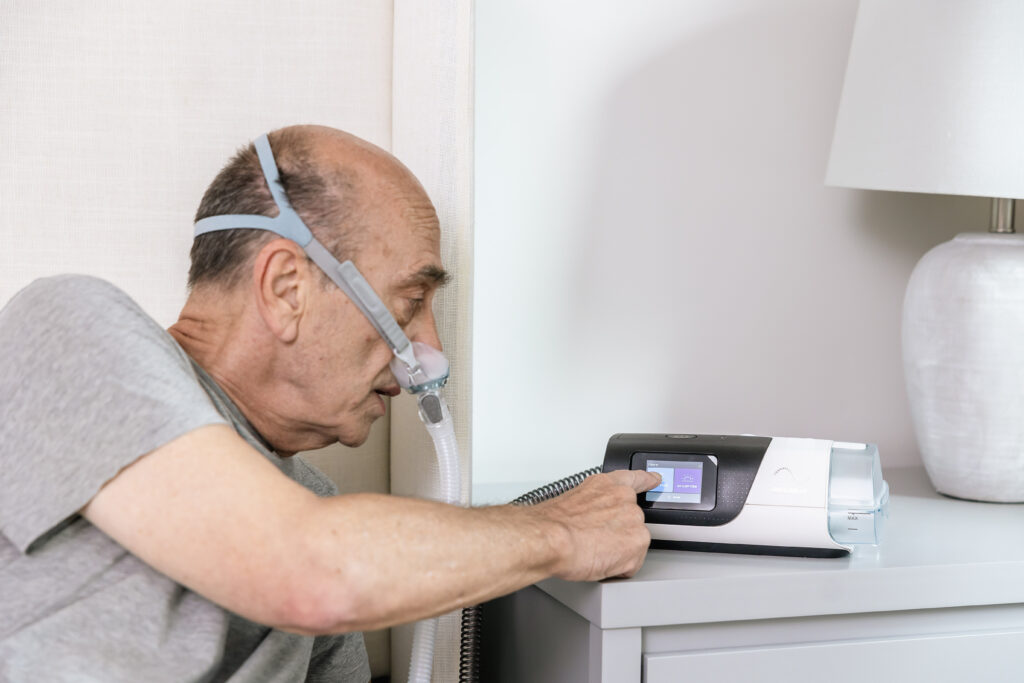
When getting a new cpap machine, deciding what to do with an old cpap machine can be a concern. In Western North Carolina, the organization Project Access takes used machines and distributes them to uninsured people with sleep apnea in the local area.

Project Access was founded in 1996 and is powered entirely by donations, grants and the voluntary efforts of local health care providers. Their sole purpose is to make comprehensive health care accessible to the growing number of low-income and uninsured residents of Buncombe County. Providers do not receive any payment or tax benefits from making themselves available to those enrolled in Project Access, but do have the opportunity to demonstrate their professional commitment to the well being of a community.

Aeroflow Healthcare is involved with Project Access’ local network of providers, which include Mission Hospitals, Advanced Home Care, LabCorp, and Western North Carolina Community Health Services (WNCCHS).  If your CPAP machine is being replaced or is no longer useful for your condition, our office locations can coordinate the donating of the device to Project Access. Please contact one of our regional locations, or the main office in Asheville to arrange this. When a private physician diagnoses a person with sleep apnea, Project Access will provide this donated device and manage any available supplies.

At Aeroflow Healthcare, we understand that not all people can afford the costs of basic, necessary health care, and we support Project Access’ mission through our equipment donations.

Dangers of Purchasing a Used Wheelchair

April 16th, 2013

by Logan Hickey

You’re in need of a wheelchair and are thinking about purchasing a used one. But first, you should be fully aware of the risks and dangers involved in making such a decision. Here are four factors you will want to consider before determining if a used wheelchair that is right for you.

No Warranty
Yes, it’s true. When purchasing a used wheelchair, you are given no warranty or guarantee of longevity. Whether the wheelchair was originally purchased in the last few years or is 15 years old, you will not be given a warranty. You basically must keep your fingers crossed that the wheelchair is durable and will last many years. This is a huge risk to take.

Hidden Defects
With no warranty given, you run the risk of hidden defects or broken internal parts. This can be extremely dangerous as if there are hidden defects, you could suffer severe injuries. For example, for a non-power wheelchair, a lose screw could lead to a broken leg of the wheelchair. If it does, you will not be given a warning. This could lead to potentially debilitating injuries. For a power wheelchair, the outside of the motor housing could be covered with dirt and grease. This means that the wheelchair has not been properly maintained, meaning the wheelchair may be close to shutdown. Unless you are an expert with these wheelchairs, you may not be able to recognize these hidden defects or damages. Ultimately, your used wheelchair may not turn out to be all that you are expecting.

Out-of-Pocket Expenses
Having detailed the risks of defects and damages associated with used wheelchairs, it is now important to examine the potential costs of maintaining them. After all, the likely reason you would want to buy a used wheelchair is to save money. The truth, however, is that you will likely spend more in maintenance and repair costs than you would in buying a new one. With no warranty, you will not be covered for any repairs no matter the size of the repair. This could lead to soaring expenses, and ultimately could cost you much more than the price of a new wheelchair.

Specialized Equipment
Most importantly, you want to remember that wheelchairs are specialized pieces of equipment. Your doctor will recommend the right wheelchair for you. Wheelchairs are meant to be personalized to meet your specific needs. Since you will be continually using it, you need to have a wheelchair that best fits your needs and was ordered with your specific needs in mind. When purchasing a used wheelchair, these features are up in the air. You run the risk of buying a product that is not right for you.

Having reviewed the dangers to consider when determining if a used wheelchair is right for you, you are now prepared to make an informed decision. Remember, there is a reason that the previous owner is likely upgrading to new equipment. Used wheelchairs are often second rate, can be filled with defects and can become money pits. So, no matter what you decide, make the decision that makes you most comfortable, literally.

Negative Pressure Wound Therapy Helps Wounds Heal

April 9th, 2013

Negative pressure wound therapy is a technique that has come into popularity within the past 25 years. This therapy is primarily utilized for recurrent or surgical wounds that will require extended healing time.
The pumps that facilitate negative pressure wound therapy cover the wound area and create a sealed environment. With the application of negative pressure, circulation is promoted and edema (or fluid build-up and swelling) reduced. In other words, this therapy manually assists the body in it’s own healing functions by primarily promoting blood flow. A dressing must be applied between the device and the wound; which dressing should be specifically advised by a doctor. After the dressing is set, the pump may be applied to the wound environment and the negative pressure applied.
This therapy may be necessary for patients with risk factors that inhibit the body’s ability to heal wounds, including conditions like diabetes or habits like smoking tobacco. The excellent benefit of negative pressure wound therapy is clinically documented most extensively for diabetic ulcers, and studies are currently underway to document the benefit for other wound types. Where the wound exists on the body majorly impacts the effect of negative pressure wound therapy, and a physician’s opinion is necessary to go forward with the treatment.
As with other medical equipment, for insurance to cover the device a doctor must properly document medical necessity. Once a proper evaluation and paperwork are completed Aeroflow will be able to forward the request on to insurance and facilitate acquiring the product. For more details on starting  the process, please contact our patient care department today.

Wheelchair ramps are essential

April 2nd, 2013

multi fold rampsFor some, a wheelchair ramp is necessary to travel with their mobility device. If a home has one or two steps connecting rooms, or the porch does not seamlessly lead into the driveway, a wheelchair ramp makes difficult areas accessible for people with scooters or other mobility devices.

Building wheelchair ramps is a simple process. Our provider Pride Mobility makes this easy by providing ramps that fold together. Ramps are the measured as the length from the top step straight to where the ramp will end up on the ground. They come as a single piece and are folded and moved without issue. These wheelchair ramps are designed so that they will hold the weight of the patient and mobility device while still being portable.

When a patient needs a wheelchair ramp, we request that they take this measurement from the top step to the ground. Once we have this measurement, we call our partner Pride Mobility and request a quote for the ramp that they will provide. Unfortunately, insurance companies do not cover ramps as they are not considered medically necessary for the function of a mobility device. If a doctor prescribes a scooter or power chair, part of the testimony the doctor made states the home environment will support the device.

Power wheel chairs require accessories like ramps if a patient plans to use their device to travel outside of the home. Another device that is helpful for travelling with power chairs and scooters is a wheelchair lift. These lifts attach to the back of a vehicle and are available to use with or without a functioning hitch and are perfect for mobility devices that do not fold up for transport.

Though insurance does not cover the cost of these accessories, wheelchair ramps and lifts make travel with a power chair or scooter easier. They are an option that can be readily provided.